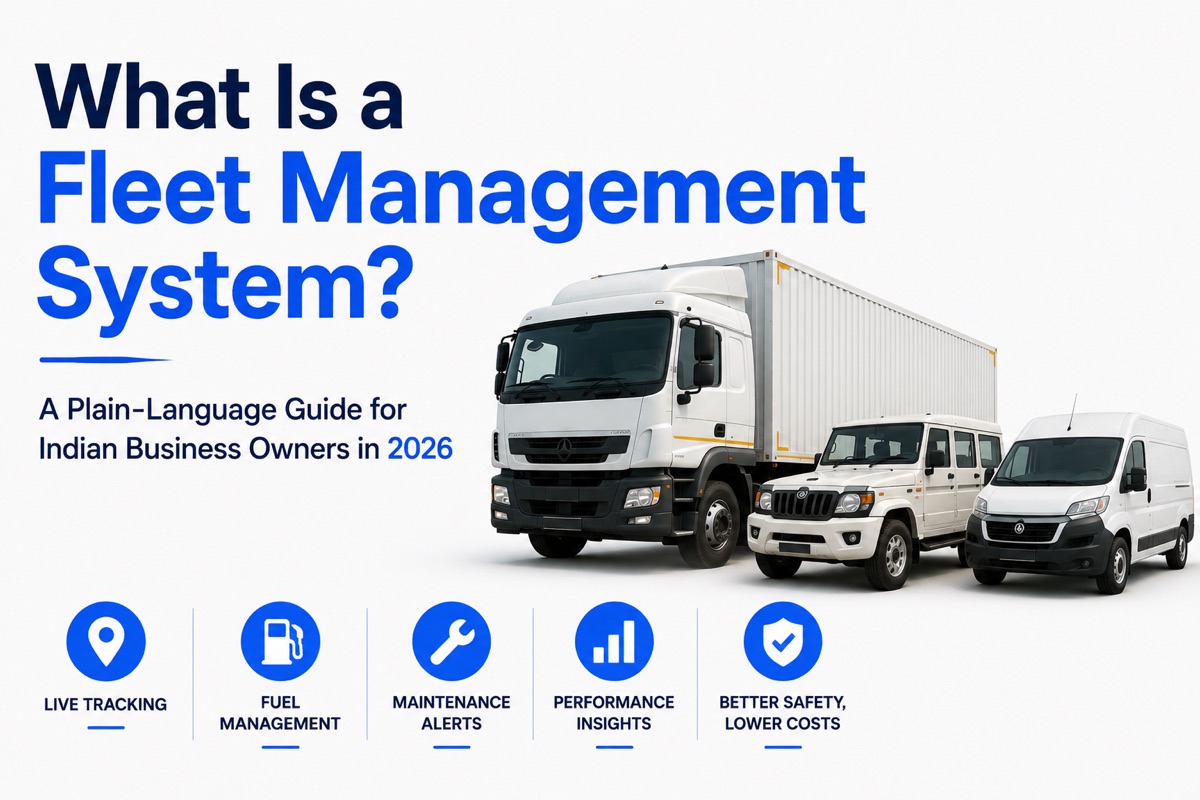
A fleet management system is software that connects your vehicles, drivers, and operations into one place — so you can see what is happening across your fleet in real time and manage it without relying on phone calls and memory.
What a Fleet Management System Actually Does
A fleet management system (FMS) — also called a transport management system or TMS — is a software platform that handles the core operational and financial workflows of running a vehicle fleet:
Operations side:
- Assigns loads to vehicles and drivers (dispatch)
- Tracks vehicle location in real time via GPS
- Plans and optimises routes
- Sends trip assignments to drivers via a mobile app
- Captures delivery confirmation digitally (digital POD)
- Monitors driver behaviour — speeding, idling, harsh braking
Finance side:
- Generates invoices automatically when deliveries are confirmed
- Applies your agreed rate cards per customer
- Calculates and processes driver settlements
- Tracks fuel costs per vehicle and per trip
- Manages toll costs via FASTag integration
- Shows profit per trip, per customer, per route
Compliance side:
- Generates e-way bills from trip data
- Tracks vehicle document expiry (fitness certificate, insurance, PUC, permits)
- Monitors driver licence validity
- Stores digital maintenance and service records
All of this used to require separate tools — or manual processes handled by people. A fleet management system connects it all.
Who Needs a Fleet Management System?
The simple test: if you own or operate 5 or more commercial vehicles for business purposes, you are carrying costs and risks that a fleet management system addresses directly.
You probably need one if:
- Your dispatcher spends most of their day on the phone coordinating loads
- You do not know your fuel cost per vehicle last month
- Your billing team chases paper PODs before raising invoices
- You have had a driver settlement dispute in the last 6 months
- A vehicle has been stopped at a checkpoint for an expired document
- You cannot tell a customer where their shipment is without calling the driver
You might not need one yet if:
- You operate fewer than 5 vehicles on simple, fixed routes
- Your operation is entirely handled by one owner-operator who manages everything personally
At 10+ vehicles, manual operations consistently cost more than the software that replaces them.
What It Costs — and What It Returns
A cloud-based fleet management system like Fleetcodes is priced per vehicle per month — with no large upfront investment, no IT infrastructure, and no implementation project.
For a 20-vehicle fleet, the monthly subscription is typically a fraction of what manual operations waste in:
- Billing leakage from missed surcharges and stale rate cards (3-8% of revenue)
- Fuel waste from unmonitored driver behaviour (8-12% of fuel bill)
- Driver attrition from settlement disputes (Rs 50,000-1,00,000 per replacement)
- Compliance fines from expired vehicle documents
Most Fleetcodes customers recover the full annual subscription cost within the first month of correct billing alone.
How Fleetcodes Works for Indian Businesses
Fleetcodes is designed specifically for Indian logistics operations — not a global product adapted for India.
What that means in practice:
- E-way bill generation integrated directly — no separate GST portal login
- GST-compliant invoicing built in
- FASTag toll integration for automatic cost allocation
- AIS 140 GPS compatibility with Indian hardware providers
- Driver app available in English and Hindi, designed for varied smartphone literacy
- Compliance tracking for India-specific documents (fitness certificate, state permits, PUC)
Deployment is fast: Most businesses are operationally live — dispatch, GPS tracking, digital POD, and billing — within 7 days. No IT department required.
FAQs
What is the difference between a fleet management system and GPS tracking? GPS tracking shows where your vehicles are. A fleet management system connects that location data with dispatch, billing, driver management, compliance, and reporting — turning location data into operational and financial intelligence.
Can a small business with 10 trucks use a fleet management system? Yes. Fleetcodes is designed to be accessible from 5 vehicles upward. The ROI is often stronger for smaller fleets because the administrative overhead of manual operations represents a higher proportion of their revenue.
How long does it take to set up Fleetcodes? Core setup — vehicles, drivers, customer rate cards, GPS integration, and driver app — typically takes 3-7 days. No IT project or professional services engagement required.
Does Fleetcodes work with my existing GPS hardware? Fleetcodes integrates with major AIS 140-certified GPS hardware providers used in India. Check compatibility with your specific hardware during the demo.
A fleet management system is not software for large companies. It is the operational foundation every vehicle-based business needs to stop losing money to manual processes. Book a Free Fleetcodes Demo — See It Live →