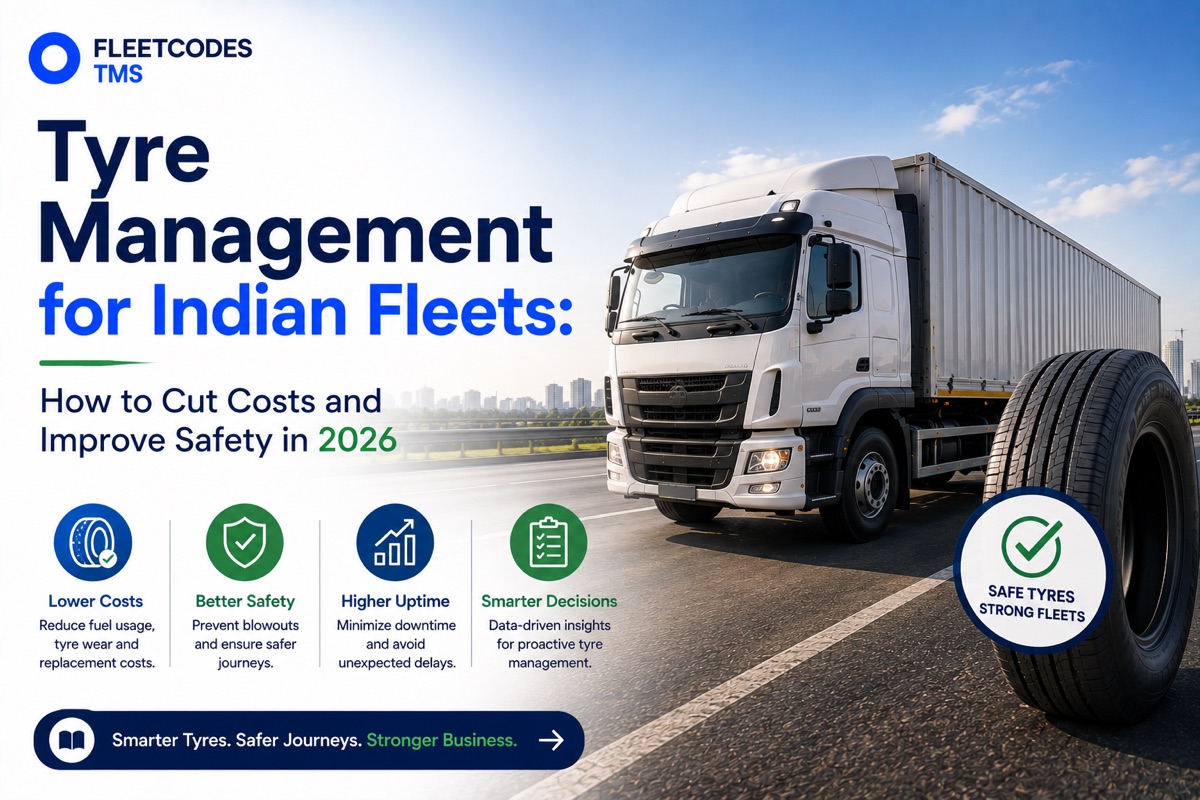
In Indian logistics operations, tyre failures are rarely isolated maintenance incidents. A single tyre burst on a loaded highway truck can trigger delivery delays, fuel inefficiency, roadside downtime, cargo damage, and even catastrophic safety incidents. In 2026, fleet operators are increasingly treating tyre management not as a workshop task — but as a core operational control system.
Why Tyres Have Become a Major Fleet Profitability Variable
For most commercial fleets in India, tyres represent one of the highest recurring operating costs after fuel.
A high-utilisation truck may consume multiple tyre sets across its operational lifecycle — making tyre performance directly linked to profitability.
But tyre cost is not limited to tyre replacement alone.
Poor tyre management creates hidden operational losses through:
- Increased fuel consumption
- Reduced vehicle stability
- Higher roadside breakdown frequency
- Faster suspension wear
- Lower driver safety
- Increased downtime
- Uneven vehicle performance
- Higher accident exposure
In many fleets, tyres are still managed reactively:
- Replace only after visible failure
- Rotate inconsistently
- Track pressure manually
- Ignore alignment issues until severe wear appears
This reactive model creates avoidable cost escalation across the fleet.
Why Indian Operating Conditions Accelerate Tyre Wear
Commercial vehicle tyre stress in India is significantly higher than in many developed logistics markets.
Several operational realities contribute to accelerated tyre degradation:
Road Surface Variability
Indian freight vehicles regularly transition between:
- High-speed expressways
- Broken rural roads
- Construction diversions
- Uneven industrial corridors
- Congested urban traffic
Constant surface variation increases:
- Heat generation
- Sidewall stress
- Tread wear imbalance
- Suspension-induced tyre damage
Overloading Pressure
Despite regulatory enforcement improvements, overloading remains common in several freight segments.
Overloaded vehicles experience:
- Excessive tyre heat build-up
- Sidewall fatigue
- Accelerated tread wear
- Increased blowout risk
- Reduced braking stability
In many cases, tyre failure is not the primary issue.
It is a symptom of operational overload stress.
High Ambient Temperatures
Indian summer temperatures place enormous thermal stress on commercial vehicle tyres.
Highway operations in regions such as:
- Rajasthan
- Gujarat
- Maharashtra
- Telangana
can expose tyres to prolonged high-temperature operating cycles.
Heat directly affects:
- Air pressure stability
- Rubber degradation
- Tread durability
- Burst probability
For long-haul fleets, tyre heat management is increasingly becoming a safety priority.
Tyre Pressure Monitoring: The Most Underrated Cost-Control System
One of the largest causes of tyre inefficiency is incorrect tyre pressure.
Both underinflation and overinflation create operational problems.
Underinflated Tyres Cause:
- Increased rolling resistance
- Higher fuel consumption
- Excessive heat generation
- Faster shoulder wear
- Increased burst risk
Overinflated Tyres Cause:
- Reduced traction
- Uneven centre wear
- Lower braking efficiency
- Higher suspension stress
Even small pressure deviations can significantly impact fleet economics when multiplied across hundreds of vehicles.
This is why TPMS fleet systems in India are becoming increasingly important.
How TPMS Systems Improve Fleet Operations
Tyre Pressure Monitoring Systems (TPMS) continuously monitor:
- Real-time tyre pressure
- Temperature fluctuations
- Pressure-loss patterns
- Sudden leak events
Instead of depending entirely on manual inspection, fleets receive automated alerts when tyre behaviour becomes abnormal.
For example:
- Slow air leakage during a highway trip
- Heat spikes on overloaded axles
- Pressure imbalance across dual tyres
- Repeated pressure drops on specific vehicles
This allows maintenance teams to intervene before:
- Tyre bursts occur
- Fuel efficiency deteriorates
- Sidewall damage becomes irreversible
In large fleets, TPMS is increasingly shifting from a safety tool to a cost-control tool.
Fleet Fuel Efficiency Is Directly Linked to Tyre Health
Many transporters underestimate how strongly tyres influence fuel cost.
Improper tyre pressure alone can increase fuel consumption significantly over long-distance operations.
Tyre-related fuel inefficiency typically comes from:
- Underinflation
- Misalignment
- Uneven tread wear
- Improper rotation cycles
- Axle imbalance
Fleet tyre management systems increasingly use tyre performance analytics to correlate:
- Fuel consumption
- Route type
- Tyre wear rate
- Vehicle load behaviour
- Driver operating style
This allows operators to identify whether rising fuel costs originate from:
- Driver behaviour
- Mechanical issues
- Or tyre-performance degradation
Tyre Rotation Scheduling: The Most Ignored Lifecycle Strategy
Commercial vehicle tyres do not wear evenly.
Front steering tyres, drive axle tyres, and trailer tyres all experience different stress patterns.
Without structured rotation schedules:
- Certain tyres wear out prematurely
- Vehicle balance deteriorates
- Total tyre lifecycle value declines
A proper tyre rotation schedule for trucks in India helps:
- Equalise tread wear
- Extend usable tyre life
- Improve handling stability
- Reduce uneven axle stress
- Improve long-term tyre ROI
But rotation discipline is difficult to maintain manually at scale.
This is where digital fleet maintenance systems become operationally valuable.
Tread Depth Compliance Is Becoming a Safety and Liability Issue
Tyre tread depth directly affects:
- Road grip
- Wet-weather braking
- Highway stability
- Emergency handling
Worn-out tyres significantly increase accident probability during:
- Monsoon operations
- High-speed braking
- Sudden lane corrections
- Heavy-load manoeuvring
Globally, regulators increasingly treat tread compliance as a safety requirement.
In India, fleet operators are also facing growing scrutiny from:
- Insurance providers
- Enterprise shippers
- Safety audits
- Contract compliance standards
Digital tread tracking systems help fleets maintain visibility into:
- Tyre wear progression
- Replacement thresholds
- Compliance readiness
Tyre management is becoming part of broader operational risk management.
Retreading Commercial Vehicle Tyres: Cost Advantage vs Risk
Retreading remains a major economic strategy in Indian commercial fleets.
Done correctly, retreading can:
- Reduce operating cost per kilometre
- Extend tyre lifecycle value
- Lower procurement cost pressure
But poor-quality retreading introduces major safety risks.
Retread failure during highway operations can lead to:
- Tyre separation
- Vehicle instability
- Cargo damage
- Roadside downtime
The key operational challenge is traceability.
Many fleets lack visibility into:
- Retread history
- Retread quality consistency
- Heat-cycle exposure
- Tyre age tracking
Modern fleet tyre management systems increasingly track:
- Original tyre lifecycle
- Retread cycles
- Performance degradation after retreading
- Failure frequency by vendor
This allows fleets to evaluate whether retreading is truly generating savings or simply delaying replacement costs.
Tyre Performance Analytics Is Changing Fleet Decision-Making
In 2026, leading fleet operators increasingly manage tyres through data rather than inspection alone.
Tyre analytics systems help fleets identify:
- Vehicles with abnormal wear patterns
- Drivers causing aggressive tyre degradation
- High-risk highway corridors
- Underperforming tyre brands
- Fuel-efficiency loss linked to tyre behaviour
- Recurring alignment problems
The objective is not merely replacing tyres on time.
It is optimising tyre economics across the entire fleet lifecycle.
How Fleetcodes Supports Fleet Tyre Management
Tyre management inside Fleetcodes helps fleet operators track:
- Tyre lifecycle history
- Pressure-monitoring alerts
- Rotation schedules
- Tread inspection records
- Vehicle-wise tyre performance
- Breakdown incidents linked to tyre failure
- Fuel efficiency correlations
- Maintenance scheduling
Instead of treating tyres as isolated consumables, the platform integrates tyre intelligence into broader fleet operations and maintenance planning.
For Indian transporters operating under rising fuel prices and tighter delivery expectations, tyre visibility is becoming a major operational advantage.
The Future of Fleet Tyre Management in India
Over the next few years, tyre management systems will become increasingly predictive.
Fleet AI systems will begin identifying:
- Probable tyre failure timelines
- Heat-risk routes
- Driver-induced wear acceleration
- Fuel-loss anomalies linked to tyre degradation
- Optimal replacement timing by route profile
As logistics operations become more data-driven, tyre management will evolve from:
"replace after failure"
to:
"prevent performance loss before failure occurs."
The fleets that master this shift will reduce both operational cost and safety risk simultaneously.
FAQs
Why is tyre management important for Indian fleets? Tyres directly affect fuel efficiency, vehicle safety, downtime, and maintenance cost. Poor tyre management increases operational expenses and roadside breakdown risk significantly.
How does TPMS help fleet operations? TPMS systems monitor tyre pressure and temperature in real time, helping fleets detect slow leaks, overheating, and pressure imbalance before tyre failure occurs.
Can tyre pressure affect fuel consumption? Yes. Underinflated tyres increase rolling resistance, which causes higher fuel consumption and accelerates tyre wear.
What is the ideal tyre rotation schedule for commercial vehicles? Rotation schedules vary based on vehicle type, route conditions, and axle configuration. Regular rotation helps equalise tread wear and extend tyre life.
Is retreading safe for commercial vehicle fleets? High-quality retreading can reduce fleet operating costs effectively, but poor retreading quality creates major safety and reliability risks. Fleets should track retread history and performance carefully.
In Indian logistics, tyres are not just consumables — they are rolling operational assets. The fleets that manage tyre performance scientifically will reduce fuel cost, improve uptime, and create safer highway operations at scale. See How Fleetcodes Helps Fleets Manage Maintenance and Performance →