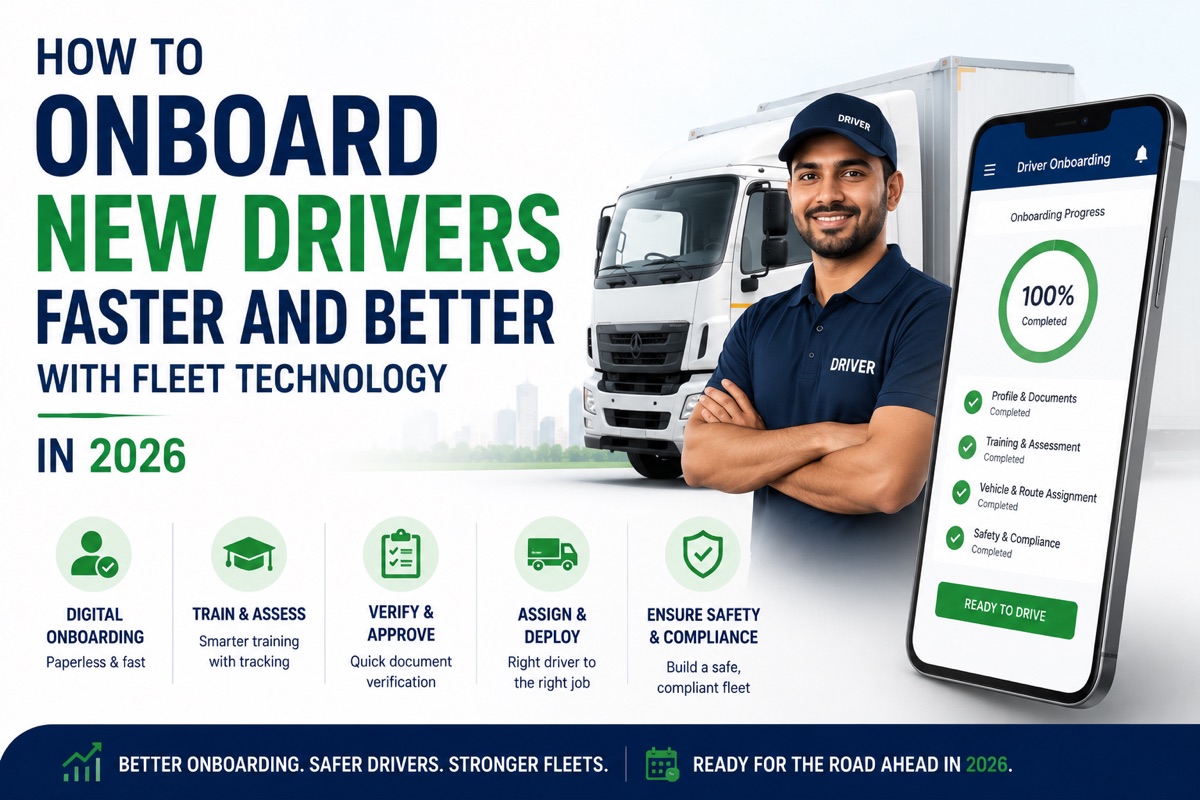
Indian logistics loses thousands of drivers annually not because of pay — but because of the first 30 days. Unclear assignments, paper confusion, delayed pay, and zero feedback on their own performance push new drivers to look elsewhere before they have had a chance to settle in.
Why Driver Onboarding Is a Retention Problem in Disguise
Industry data on truck driver attrition consistently shows the highest churn in the first 60-90 days of employment. New drivers leave for four reasons that are almost entirely within the employer's control:
1. They didn't understand what was expected of them. Route information, customer instructions, POD requirements, and expense procedures were explained verbally or on paper — and not retained or referenced later.
2. Their first settlement was wrong or late. A new driver whose first pay calculation is disputed or delayed has no trust reserve to draw on. They leave.
3. They had no visibility into their own performance. No feedback on delivery rate, fuel efficiency, or safety score — so no sense of progress or recognition.
4. The paperwork was overwhelming. Paper trip sheets, physical POD forms, manual expense claims — new drivers unfamiliar with the workflow make mistakes, get blamed, and disengage.
Each of these problems is solved by Fleetcodes.
The Fleetcodes Driver Onboarding Workflow
Day 1: App Setup and First Assignment
New driver account created in Fleetcodes — vehicle assignment, pay structure configured, document details entered (licence number and expiry, contact details, bank account for settlement).
Driver downloads the Fleetcodes app. Within 30 minutes, they have:
- Their first trip assignment — with full pickup and delivery details, customer name, goods description, and special instructions
- Turn-by-turn navigation to the pickup point
- A clear checklist of what to do at pickup (pre-loading vehicle check, load confirmation)
- A clear checklist of what to do at delivery (POD capture workflow — signature, photo, confirmation)
No paper briefing. No relying on another driver to show them the ropes. The app guides them through the workflow.
Day 1-7: Performance Visibility From the Start
From the first trip, the driver can see their own performance data in the app:
- Trips completed
- On-time delivery rate
- Fuel consumption vs vehicle baseline
- Safety score (speeding events, harsh braking)
This immediate transparency does two things: it shows the driver that the company manages performance with data (not favouritism), and it creates a framework for the operations manager to have a structured first-week conversation about what good looks like.
Day 30: First Settlement — Transparent and Automated
Fleetcodes calculates the driver's first settlement automatically from trip data:
- Trips completed and confirmed via digital POD
- km driven (GPS-verified)
- Expenses submitted and approved through the app
- Advances taken
- Applicable bonuses (fuel efficiency, on-time rate)
The settlement summary is visible to the driver in the app before finalisation. No surprises. No disputes. The driver sees exactly what they earned, and exactly how it was calculated.
A driver whose first pay experience is transparent and accurate has a fundamentally different relationship with their employer than one who receives a number with no explanation.
Document Verification and Compliance from Day One
Fleetcodes stores each driver's licence number, expiry date, and endorsement type — with automatic alerts when any document is approaching expiry.
This serves two purposes:
Compliance: A driver with an expired licence cannot be legally assigned to a vehicle. The Fleetcodes dispatch system flags this automatically — preventing an assignment that creates both legal liability and checkpoint risk.
Driver trust: When the company proactively alerts a driver that their licence is expiring in 30 days and helps them manage the renewal, it signals that the employer cares about the driver's professional status. This is a retention signal that costs nothing.
Training Compliance Tracking
For fleets carrying specialised cargo — pharmaceutical GDP requirements, hazardous goods endorsements, temperature-sensitive FMCG — training records are stored per driver in Fleetcodes. Only drivers with current training certifications are eligible for those load categories.
This protects the fleet from compliance violations and protects the driver from being assigned to loads they are not qualified for — both of which build confidence in the first weeks.
FAQs
Why do new truck drivers leave Indian fleets in the first 60 days? The primary causes are: unclear operational expectations, first settlement disputes, no feedback on their own performance, and overwhelming manual paperwork. All four are directly addressed by fleet management technology with a driver app.
How does the Fleetcodes driver app help with onboarding? The app provides new drivers with structured trip assignments, step-by-step workflow guidance for POD capture and expense submission, real-time visibility into their own performance data, and settlement transparency — replacing the verbal briefings and paper processes that create onboarding confusion.
How long does it take to onboard a new driver on Fleetcodes? Basic account creation and app setup takes under 30 minutes. Most new drivers are independently operational — completing trips, capturing POD, and submitting expenses — within their first working day.
Does Fleetcodes track driver training certifications? Yes. Training completion records and expiry dates are stored per driver. The system flags drivers without current certifications for relevant load categories and prevents assignment to loads requiring qualifications the driver does not hold.
The first 30 days are when drivers decide whether to stay. Structured, technology-supported onboarding makes that decision easier — in your favour. See How Fleetcodes Supports Driver Onboarding and Retention →