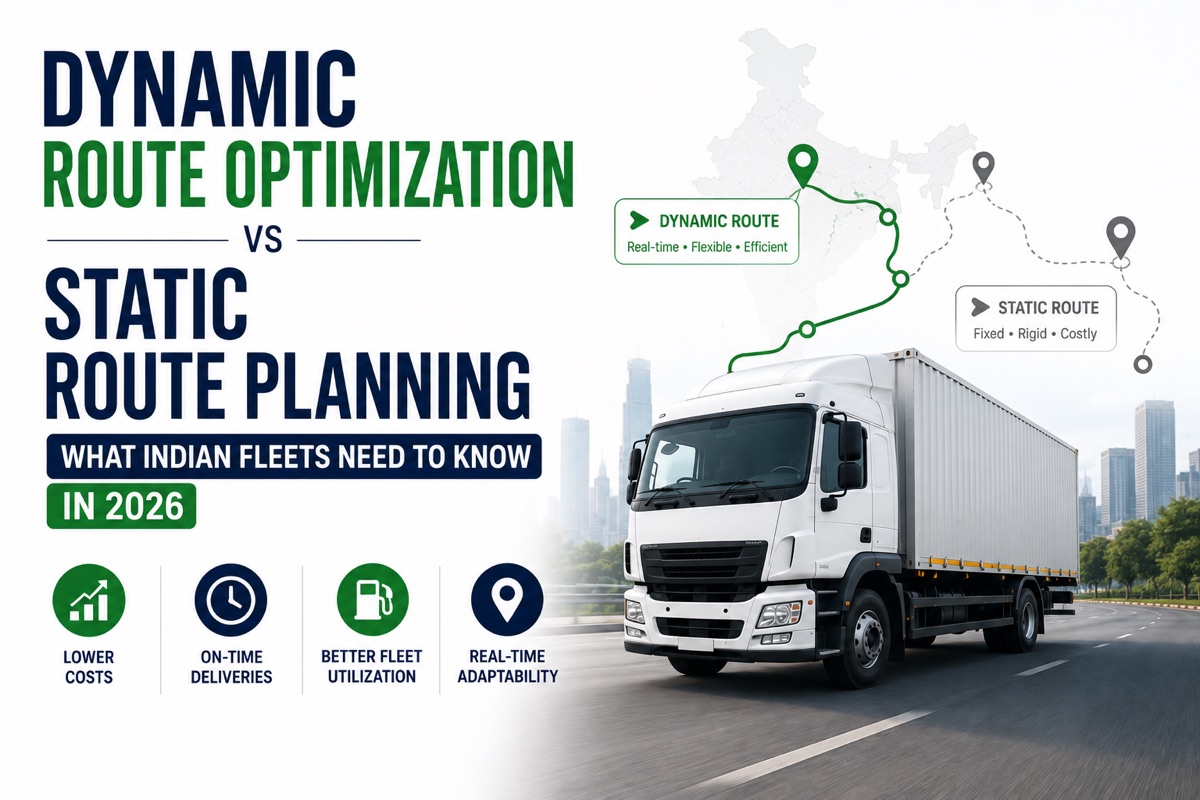
A route that was optimal at 7 AM is rarely still optimal at 11 AM. Traffic has shifted, a delivery was refused, a new load came in. Static planning locked you into a decision made with yesterday's information.
Static Route Planning: What It Is and Where It Falls Short
Static route planning calculates the most efficient route at the time of dispatch — based on distance, delivery sequence, and known time windows. Once assigned, it does not change unless a dispatcher manually intervenes.
Most Indian fleet operators using basic GPS tools work this way. The route is planned in the morning. If something changes — traffic on NH-48, a refused delivery at stop 7, a vehicle breakdown — the response is reactive: a phone call, a manual re-plan, a missed window.
Static planning is better than no planning. But in India's operational environment — where urban traffic shifts dramatically through the day and construction or monsoon disruptions are routine — it consistently leaves efficiency on the table.
Dynamic Route Optimization: What Changes
Dynamic route optimization continuously recalculates routes based on live data throughout the trip — not just at dispatch.
Key inputs it monitors in real time:
- Live traffic: Congestion building on a planned route triggers automatic rerouting
- Delivery exceptions: A refused delivery is removed and the remaining sequence reoptimised instantly
- Vehicle progress: Running ahead or behind schedule, downstream stops adjust accordingly
- New load assignments: A return load added mid-journey is incorporated into the active route at the optimal insertion point
The result: every vehicle is always on the best available route given current conditions — not the best route from 7 AM.
Why This Matters More in India Than Most Markets
Indian roads make dynamic optimization particularly valuable:
Traffic unpredictability: Delhi, Mumbai, and Bengaluru traffic can shift 45+ minutes between morning and midday. A statically planned route does not adapt.
Multi-stop urban distribution: 20-25 stops per vehicle per day means every refused delivery or extended dock wait changes the optimal sequence for remaining stops.
Seasonal and construction disruptions: Monsoon flooding, NH expansion works, harvest season agricultural traffic — India's roads create dynamic disruptions that static plans cannot accommodate.
How Fleetcodes Delivers Dynamic Optimization
Fleetcodes route optimization operates continuously — not as a one-time dispatch calculation.
At dispatch: Initial route calculated for vehicle type, delivery windows, toll costs, and driver hours.
During the trip: GPS position monitored against the plan. Significant deviation triggers reroute calculation. Driver app updates automatically.
On delivery exception: Driver marks a delivery refused in the app. Remaining route reoptimised instantly. Dispatcher and driver see updated sequence and ETA simultaneously.
On new assignment: Return load added to an active vehicle. Fleetcodes calculates the optimal insertion point in the current route — no manual replanning required.
The Measurable Difference
| Metric | Static Planning | Dynamic Optimization | |---|---|---| | On-time delivery rate | 82–88% | 91–96% | | Fuel per route | Baseline | 8–12% lower | | Dispatcher intervention calls | 15–25/day | 4–7/day | | Failed delivery rate | 18–25% | 10–14% |
For a 50-vehicle fleet, a 4% OTDR improvement and 10% fuel reduction represents crores in annual impact.
FAQs
What is the main difference between dynamic and static route optimization? Static calculates the best route at dispatch and does not change. Dynamic recalculates continuously based on live traffic, delivery exceptions, and new assignments throughout the journey.
Does Fleetcodes support real-time route changes during active trips? Yes. Fleetcodes monitors vehicle position and trip progress continuously. When conditions change, the route is recalculated and updated in the driver app automatically.
How does dynamic routing reduce fuel costs? By routing around traffic congestion, resequencing stops after exceptions, and incorporating return loads efficiently — reducing total km driven per route.
The best route is not the one you planned at 7 AM. It is the one that accounts for everything that has happened since. See Fleetcodes Dynamic Route Optimization — Book a Demo →