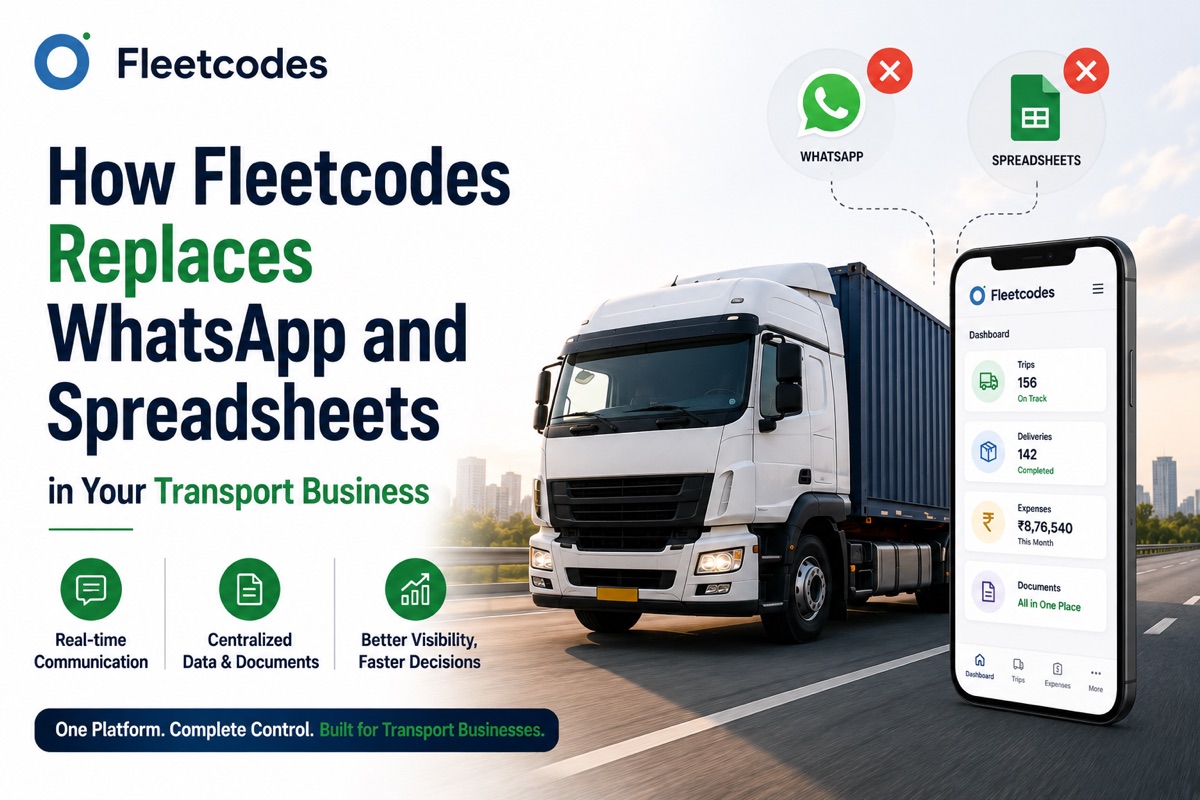
Walk into almost any mid-sized transport office in India and you'll find the same setup: a dispatcher with three or four WhatsApp groups open, and an Excel sheet somewhere tracking vehicles, trips, or billing that only one person really understands.
It works. Until it doesn't.
Why WhatsApp and Excel Became the Default
There's a reason almost every transport business in India runs this way. WhatsApp is free, every driver already has it, and it requires zero training. Excel is flexible enough to bend into a trip tracker, a billing sheet, or a settlement log, depending on what a business needs that month.
The problem isn't that these tools are bad. It's that they were never designed to run a logistics operation, and the cracks show up predictably as a fleet grows past 15-20 vehicles.
Where It Breaks Down
Information Lives in the Wrong Place
A driver sends a POD photo into a WhatsApp group. Someone has to notice it, save it, match it to the right trip, and manually update a spreadsheet. Multiply that by 30-100 trips a day, and it's a bottleneck with a person's name on it.
Nothing Is Connected
The WhatsApp group doesn't talk to the Excel sheet. The Excel sheet doesn't talk to the accounting software. Every handoff between tools is a manual re-entry — and a chance for an error.
There's No Single Source of Truth
Ask a business owner "how many vehicles are on the road right now?" and the honest answer is often "let me check with the dispatcher." That's an infrastructure problem, not a knowledge problem.
It Doesn't Scale with Headcount
Every additional vehicle means more messages, more spreadsheet rows, more manual reconciliation. Growth in a spreadsheet-run fleet means growth in administrative headcount just to keep up.
What Replaces It
- Dispatch, without the group chat. AI dispatch planning recommends load-to-vehicle assignments directly in the system based on location, driver hours, and route history.
- POD, without the photo hunt. The driver app captures signature, photo, geotag, and timestamp — structured data attached to the right trip automatically.
- Billing, without the spreadsheet. GST-compliant invoices generate automatically from stored customer rate cards once POD is confirmed.
- Visibility, without the phone call. Real-time GPS tracking and a customer-facing portal let shippers see live status themselves.
What Fleet Owners Notice First
The most common first reaction isn't about a specific feature — it's the sense of finally having one place to look. One dashboard showing fleet utilization, revenue, and cost per km, updated in real time, instead of a mental map pieced together from group chats and a spreadsheet that's always slightly out of date.
WhatsApp and Excel got a lot of transport businesses to where they are today. But a business running 30, 50, or 200 vehicles needs infrastructure built for logistics — not tools repurposed under pressure.
See what running your fleet on one connected platform actually looks like. Request a demo and our team will walk you through it.